Japanese Knife Guide
If you already own a Western chef’s knife from a brand like Wusthof, Zwilling, or another German-style maker, you probably do not need someone to tell you it is a useful tool. A good Western chef’s knife is familiar, sturdy, and capable. It can chop onions, cut potatoes, split squash, mince herbs, and handle daily kitchen work without drama.
But if your weekends revolve around steak, BBQ, roasts, and clean slices on a wooden board, the question changes.
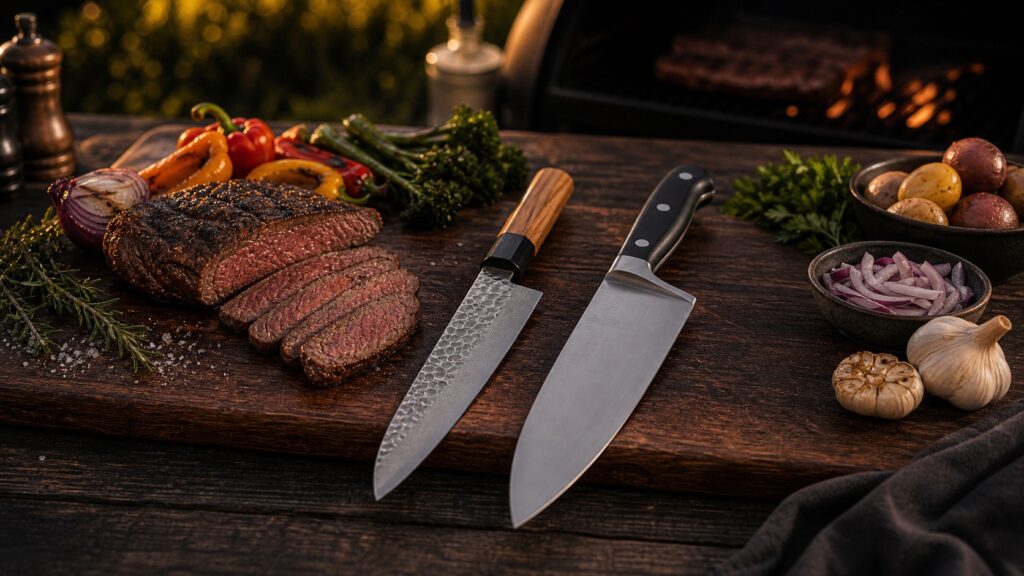
Gyuto vs chef knife is not really about which knife is better at everything. It is about what kind of cutting you care about most. A Western chef’s knife often feels strong and forgiving. A Japanese gyuto often feels lighter, thinner, and more precise through meat. Both are real tools. They just speak different languages on the board.
For a backyard cook who already has a Western knife, a gyuto can make sense as the next serious knife. Not a replacement. A step into a different kind of control.
| Question | Short answer |
|---|---|
| Which is better for heavy daily prep? | Western chef’s knife |
| Which is better for clean steak preparation? | Gyuto |
| Which feels more familiar to most American home cooks? | Western chef’s knife |
| Which is the better next knife for BBQ meat presentation? | Gyuto |
What Is a Western Chef’s Knife Built For?
A Western chef’s knife is the knife many American cooks start with. German-style chef knives are usually broad, substantial, and curved through the belly. That curve supports rocking cuts. The weight helps with dense ingredients. The handle often feels secure and familiar.
This is why knives from Wusthof, Zwilling, and similar Western makers have such a strong place in home kitchens. They are not delicate tools. They are built for daily use.
A Western chef’s knife is strong at:
- Chopping onions, carrots, celery, and potatoes
- Rocking through herbs
- Handling dense vegetables
- General prep when you want weight behind the cut
- Being forgiving for cooks who use one knife for many tasks
For a lot of cooking, that weight is useful. It gives confidence. It makes the knife feel planted. If you grew up using this shape, the motion feels natural.
But meat is not always asking for weight. Steak, roast beef, and BBQ slices often ask for something else: a cleaner path through the cut.
What Is a Gyuto Built For?
A gyuto is a Japanese chef knife. The word is often translated as “beef sword,” though modern gyuto knives are not only for beef. They are general-purpose knives with a long edge, pointed tip, and cutting profile that works well for both meat and vegetables.
Compared with many Western chef knives, a gyuto often feels:
- Lighter in the hand
- Thinner behind the edge
- More direct through protein
- More precise at the tip
- Less dependent on force
That difference matters when the job is meat. A gyuto is not trying to crush its way through the board. It is meant to travel. The cut feels quieter. The blade enters the meat with less pressure. The hand does not need to perform as much.
For someone who cares about steak preparation, that is the appeal. You are not buying drama. You are buying a different motion.
A gyuto is especially useful for:
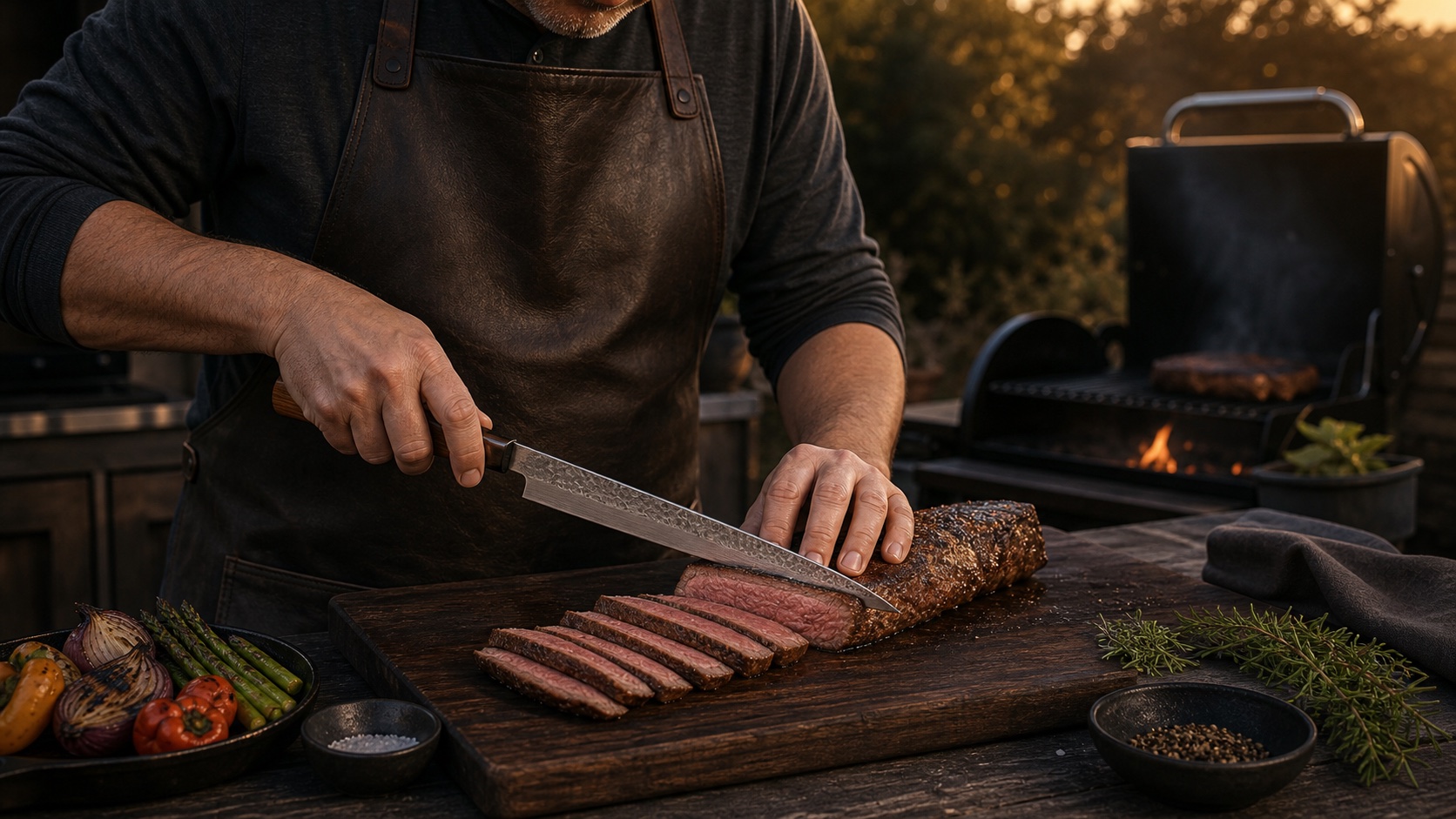
- Slicing rested steak
- Cutting roast beef or tri-tip
- Portioning boneless meat
- Preparing onions, peppers, garlic, herbs, and sides
- Making clean serving cuts on a board
This is where the phrase gyuto for meat makes sense. Not because a gyuto replaces every butcher’s knife. It does not. It makes sense because it handles the meat work most home BBQ cooks actually do at the board.
Japanese Chef Knife vs Western Chef Knife
The phrase Japanese chef knife vs Western chef knife can sound like a fight. It should not be. A serious cook can own both and use both with purpose.
The Western chef’s knife is familiar strength. The Japanese gyuto is controlled movement.
Here is the practical difference:
| Feature | Western chef’s knife | Japanese gyuto |
|---|---|---|
| Typical feel | Heavier, sturdy, planted | Lighter, more precise, direct |
| Blade profile | Broader, more curved belly | Longer-feeling edge, slimmer tip |
| Common motion | Rocking and chopping | Push cuts, pull cuts, controlled slicing |
| Best everyday strength | Dense vegetables and rougher prep | Meat slicing, clean cuts, precise board work |
| BBQ role | General prep knife | Meat-focused main knife |
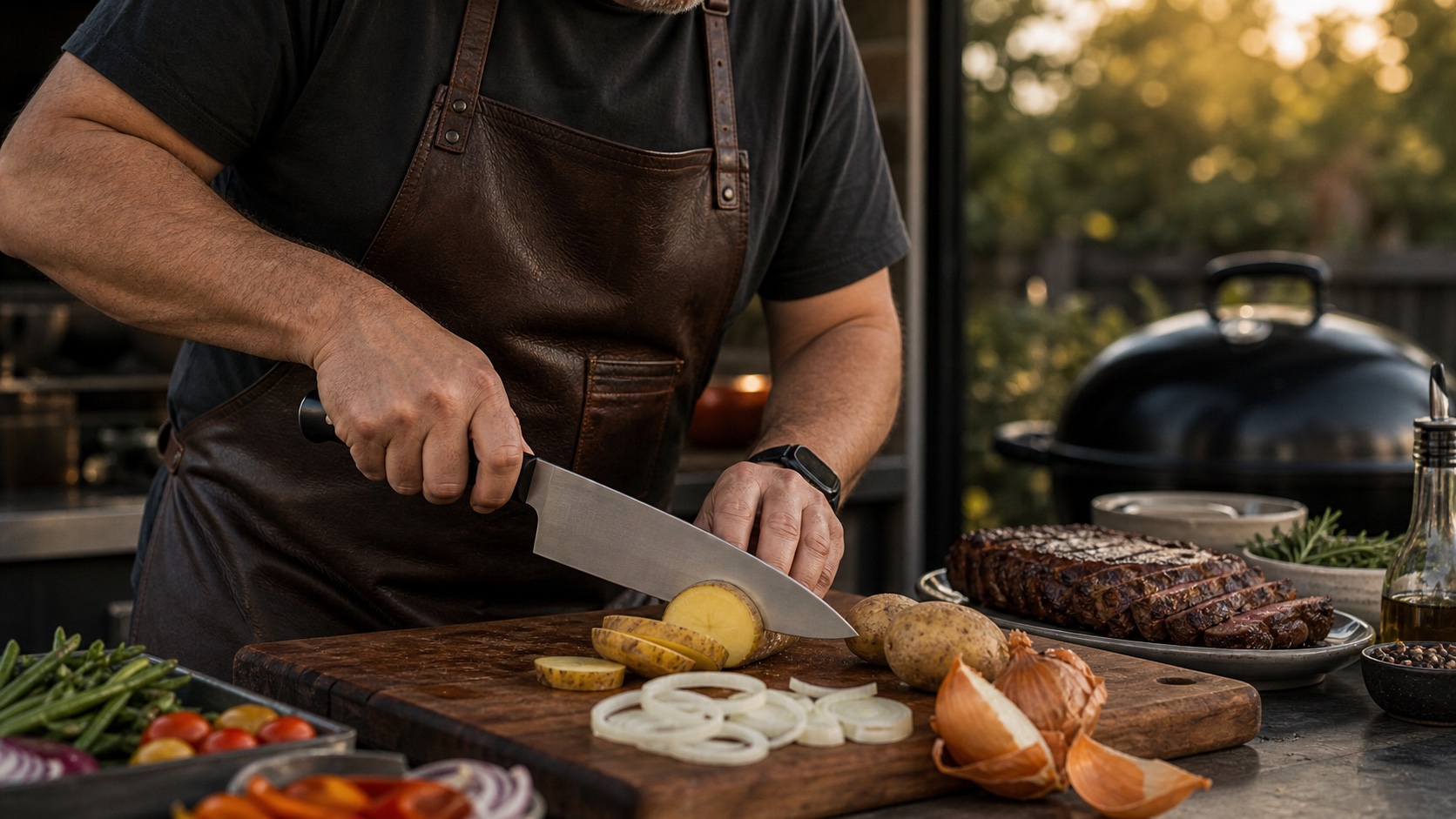
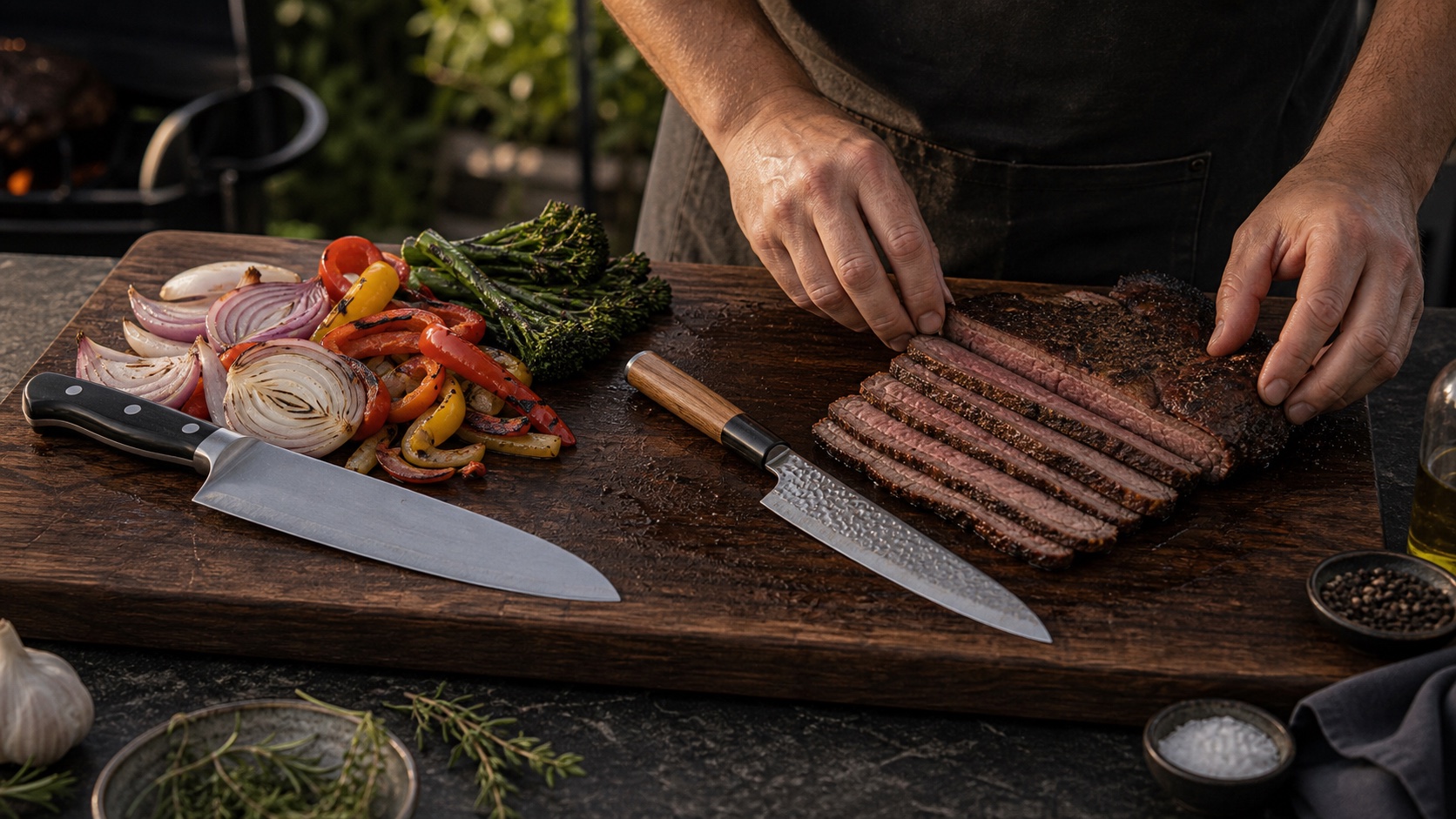
If you are cutting potatoes for a family dinner, the Western chef knife may feel right. If you are slicing a rested steak and want every piece to show the grain cleanly, the gyuto starts to separate itself.
That is the whole point. A gyuto does not need to beat the Western knife at everything. It only needs to give you a better experience in the work you care about most.
Japanese Knife vs German Knife for Meat
The search phrase Japanese knife vs German knife usually comes down to feel.
German-style knives often give you weight and durability. Japanese knives often give you thinness and precision. That is a simplified version, but it helps explain why the experience changes at the cutting board.
With meat, weight can be helpful up to a point. If you are breaking down rough ingredients or doing heavy prep, a stronger Western profile feels secure. But cooked steak does not need a heavy hand. It needs a clean path. A knife that wedges or presses too much can disturb the surface of the slice.
A gyuto rewards a different habit:
- Set the edge.
- Use the length of the blade.
- Keep the motion calm.
- Let the cut finish cleanly.
That is why a gyuto can feel so satisfying for BBQ. The result is visible immediately. The slice looks cleaner. The board looks more intentional. The movement feels less forced.
If you already own a German-style chef knife, you do not need to throw it away. Keep it. Use it. Let it do the work it is good at. Add a gyuto when you want a knife that treats meat with more restraint.
Which Is the Best Knife for Steak Preparation?
The best knife for steak preparation is the knife that gives you clean slices with minimal pressure. For most serious home cooks, that points toward a gyuto.
Steak preparation has two phases. Before cooking, you may trim small edges, cut aromatics, prepare sides, or portion larger pieces. After cooking, the rested steak needs clean slicing. A gyuto is useful in both phases.
The blade length helps you make fewer strokes. The slimmer profile helps reduce drag. The pointed tip gives you control around fat, edges, and small adjustments. This is not about looking like a chef. It is about respecting the meat after the cook.
A Western chef knife can slice steak. A good one will do it well enough for many people. But if steak and BBQ are part of your identity as a hobby, “well enough” may not be the point.
The point is the clean face of the cut.
For steak, the gyuto feels less like a kitchen default and more like a deliberate choice.
When a Western Chef’s Knife Still Makes Sense
A gyuto is not a magic answer. It is not the only knife worth owning. There are moments when a Western chef’s knife still makes complete sense.
Use a Western chef’s knife when:
- You want weight for dense vegetables
- You prefer a rocking motion
- You are doing rougher prep
- You want one forgiving kitchen knife for many users
- You are not focused on precise meat presentation
This matters because a serious tool recommendation should be honest. If your Western knife is working for you, it is still useful. The gyuto enters the picture when your standards shift.
Maybe you are cooking better steaks. Maybe you are serving friends more often. Maybe you notice the difference between a clean slice and a torn one. Maybe the knife itself has become part of the pleasure.
That is when the next knife starts to make sense.
When a Gyuto Becomes the Right Next Knife
A gyuto becomes the right next knife when you already have the basics covered and you want more control on meat.
You are probably ready for a gyuto if:
- You cook steak, tri-tip, roast beef, or BBQ regularly
- You care about the final slice as much as the cook
- You like tools that feel intentional
- You already own a Western chef’s knife but want a different cutting experience
- You want something made in Japan with a quieter, more refined feel
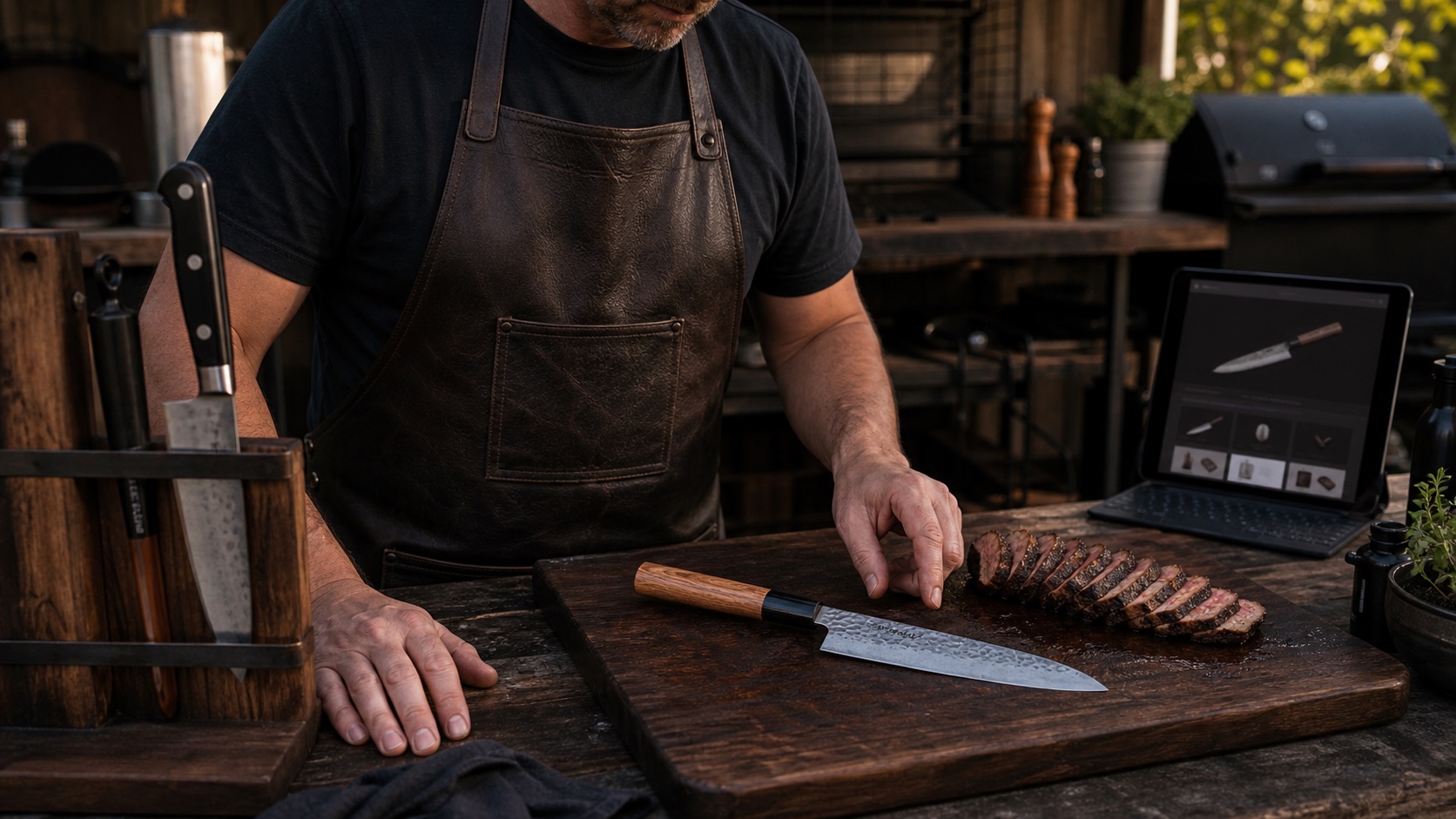
For a person like Mike – the weekend BBQ cook with a real board, a grill outside, and people waiting for meat – the gyuto is not an abstract Japanese knife trend. It is a better tool for a specific moment.
The steak rests. The board is ready. The knife moves once. The slice tells the story.
Where Quiet Edge Seki Fits
Quiet Edge Seki is for the cook who already understands tools. It is a Japanese gyuto selected for meat preparation, controlled slicing, and the kind of BBQ board work where the details show.
If you already own a Wusthof, Zwilling, or another Western chef knife, Quiet Edge Seki does not need to replace it. Let your Western knife handle heavy daily prep. Let the gyuto handle the moment when steak, roast, or BBQ deserves a cleaner finish.
For steak. For BBQ. Made in Japan.
Quick Answers
Gyuto vs chef knife: which is better for meat?
For clean meat slicing and steak preparation, a gyuto is often better. For heavy general prep and dense vegetables, a Western chef’s knife can still be more comfortable.
What is the difference between a Japanese chef knife and a Western chef knife?
A Japanese gyuto often feels lighter, thinner, and more precise. A Western chef’s knife often feels heavier, broader, and more familiar for rocking cuts and dense prep.
Japanese knife vs German knife: which should I buy next?
If you already have a German-style chef knife and want better control for steak, roast, and BBQ slicing, a Japanese gyuto is a strong next knife. If you need one forgiving knife for rough daily prep, stay with the Western chef knife first.
Is a gyuto good for meat?
Yes. A gyuto is good for meat when the task is slicing, trimming boneless cuts, and clean board work. It is not for cutting bone or frozen meat.
Is a gyuto the best knife for steak preparation?
For many serious home cooks, yes. A gyuto gives steak preparation a long, controlled edge and a precise tip, which helps produce clean slices after the meat rests.